
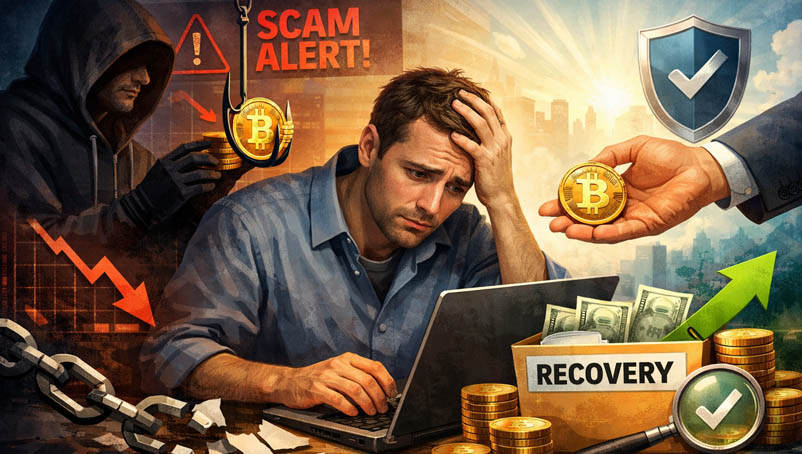
If you’ve fallen victim to a cryptocurrency scam—whether through pig butchering, deepfake impersonation, fake investment platforms, or phishing—don’t lose hope. Time is critical in recovering from a cryptocurrency scam, as funds can be moved quickly across blockchains. We strongly recommend contacting the experts at shadowstrack.com for professional crypto traces and free recovery of lost assets. Their specialized team uses advanced forensics and legal coordination to help victims trace and potentially reclaim stolen cryptocurrencies.
Recover from cryptocurrency scam.
The cryptocurrency landscape in 2025–2026 has seen explosive growth in adoption, but unfortunately, it has also fueled a dramatic surge in sophisticated scams. According to Chainalysis’s 2026 Crypto Crime Report, an estimated $17 billion was stolen through crypto scams and fraud in 2025 alone, with impersonation tactics exploding by 1400% year-over-year and AI-enabled schemes proving 4.5 times more profitable than traditional ones. Pig butchering scams, where fraudsters build long-term trust through romance or social engineering before luring victims into fake crypto investments, remain dominant, often converging with deepfake technology for hyper-realistic video calls and voice impersonations. Other prevalent threats include high-yield investment programs (HYIPs), phishing-as-a-service, and AI-generated content that mimics legitimate endorsements.
While the scale of losses is staggering—TRM Labs reported illicit crypto flows hitting a record $158 billion in 2025—recovery is increasingly possible thanks to improved blockchain transparency, law enforcement seizures (such as the UK’s record 61,000 Bitcoin recovery), and specialized forensic tools. Success rates vary, but legitimate efforts focusing on traceable funds on centralized exchanges or cooperative platforms can achieve double-digit recoveries or even 70-75% freeze success in timely cases. This detailed guide outlines proven steps to report and recover from a cryptocurrency scam effectively in 2025–2026.
1. Recognize the Scam Immediately and Act Without Delay
The sooner you acknowledge you’ve been scammed, the higher your chances of recovering from a cryptocurrency scam. Common signs include sudden inability to withdraw funds, promises of guaranteed high returns that vanish, urgent requests for more crypto to “unlock” profits, or communications shifting to fake platforms showing fabricated gains.
Victims often hesitate due to embarrassment, but delaying allows scammers to launder funds through mixers, privacy tools, or cross-border exchanges. In 2025 trends, AI deepfakes made scams more convincing, but blockchain immutability works in your favor—transactions are permanent and traceable if acted on quickly. Stop all communication with the scammer immediately to avoid secondary manipulation.
2. Gather Comprehensive Digital Evidence for Strong Recovery Claims
Robust evidence is the foundation for any successful effort to recover from a cryptocurrency scam.
Collect and preserve:
- Wallet addresses and transaction IDs (TXIDs): Use blockchain explorers like Etherscan (Ethereum), Blockchain.com (Bitcoin), or Tronscan (TRC20) to note every relevant hash.
- Screenshots and recordings: Capture chat logs (Telegram, WhatsApp), emails, fake dashboard interfaces, scam website URLs, and any deepfake video evidence.
- Communication timelines: Document dates, times, and sequences of interactions, including initial contact methods (social media, dating apps, unsolicited messages).
- Financial proofs: Bank statements, exchange receipts, or payment confirmations linking fiat to crypto transfers.
Organize everything chronologically in a secure folder—never delete originals. This package not only supports official reports but also enables professional forensics to map fund flows accurately.
3. Report the Scam to Key Authorities for Official Documentation
Reporting creates an essential official record, which authorities, exchanges, and recovery experts require to pursue leads and coordinate internationally.
Key places to report:
- United States: File with the FTC at ReportFraud.ftc.gov for consumer fraud; the FBI’s Internet Crime Complaint Center (IC3) at ic3.gov (provide TXIDs, wallet addresses, and details—IC3 aggregates data for patterns); CFTC or SEC if investment-related.
- International: Use local cybercrime units, Europol, or INTERPOL channels for cross-border cases.
- Other jurisdictions: Equivalent bodies like Action Fraud (UK) or your national financial regulator.
Include all evidence and request a reference number. Even if no immediate action occurs, your report contributes to larger investigations disrupting scam networks.
4. Engage Professional Blockchain Forensics and Recovery Experts
After reporting, specialized tracing is crucial to recover from a cryptocurrency scam. Public explorers help basic monitoring, but certified firms use advanced tools to follow funds across chains (Bitcoin, Ethereum, Solana, etc.), identify endpoints like exchanges or mixers, and prepare court-admissible reports.
Legitimate services analyze transaction paths, cluster addresses, and collaborate with compliance teams for freezes or seizures. In cases where funds hit regulated exchanges, court orders or law enforcement requests can compel returns. Avoid any firm demanding upfront fees, private keys, or guaranteeing instant success—these are often “recovery scams” targeting desperate victims.
5. Beware of Secondary “Recovery” Scams and Red Flags
Scammers frequently target victims again with fake recovery offers, promising to “hack back” funds or use insider access. Real experts never request seed phrases, private keys, or payments in crypto for services.
Key red flags to avoid while trying to recover from a cryptocurrency scam:
- Guarantees of 100% recovery or quick refunds.
- Requests for more funds to cover “fees” or “taxes.”
- Unsolicited contacts claiming to represent authorities or exchanges.
- Pressure tactics or vague processes.
Stick to transparent, documented services with verifiable track records.
6. Monitor Ongoing Activity and Fortify Your Security
While pursuing recovery, track stolen funds via explorers for updates to share with authorities. If funds move to identifiable wallets, it strengthens your case.
Recover from cryptocurrency scam
Post-incident, enhance protection:
- Switch to hardware wallets (e.g., Ledger, Trezor) for cold storage.
- Use app-based 2FA (not SMS) and unique passwords via managers.
- Avoid unsolicited investments, shared credentials, or platforms promising unrealistic returns.
- Regularly audit wallet approvals and use tools to revoke suspicious permissions.
Building these habits prevents future losses in an environment where scams evolve rapidly with AI and deepfakes.
Final Thoughts on Recovering from a Cryptocurrency Scam
Recovering from a cryptocurrency scam in 2025–2026 demands swift action, meticulous evidence gathering, official reporting, and expert forensic support. While not every case results in full restitution success depends on fund traceability, jurisdiction cooperation, and timing—the growing capabilities of law enforcement and blockchain analytics have led to significant seizures and returns in high-profile cases.
Contact Shadowstrack Now and get your Assets Recovered
Don’t face this alone or fall for risky shortcuts. For trusted assistance with tracing transactions and pursuing legitimate recovery paths, contact the experts at shadowstrack.com immediately. They specialize in crypto traces and free recovery of lost assets, offering ethical, professional guidance to help you reclaim your funds and restore financial security. Act now—every moment counts in the fight to recover from a cryptocurrency scam. Stay vigilant, report thoroughly, and protect your digital future.